Cotton Fiber Properties: Length, Diameter, and Spinning Quality

Latest posts by Shah Miran Munshi (see all)
Cotton Fiber Properties: Length, Diameter, and Spinning Quality
Characteristics of cotton fibers:
Cotton is a plant derived, naturally occurring, unicellular, cellulose based, staple fiber. The word ‘cotton’ is originated from Arabic language. Fiber density of cotton is 1.52 g/cm3, thus cotton is a heavy fiber.
Structure & appearance of cotton: Generally, the cotton fiber is fine and smooth, ranging in a length from 10mm to 65mm. Length matters a lot since more the length, the easier it’s to perform spinning upon it and turning into smoother and stronger yarn. Quality of fabrics highly depends upon the length of cotton fibers in this regard.
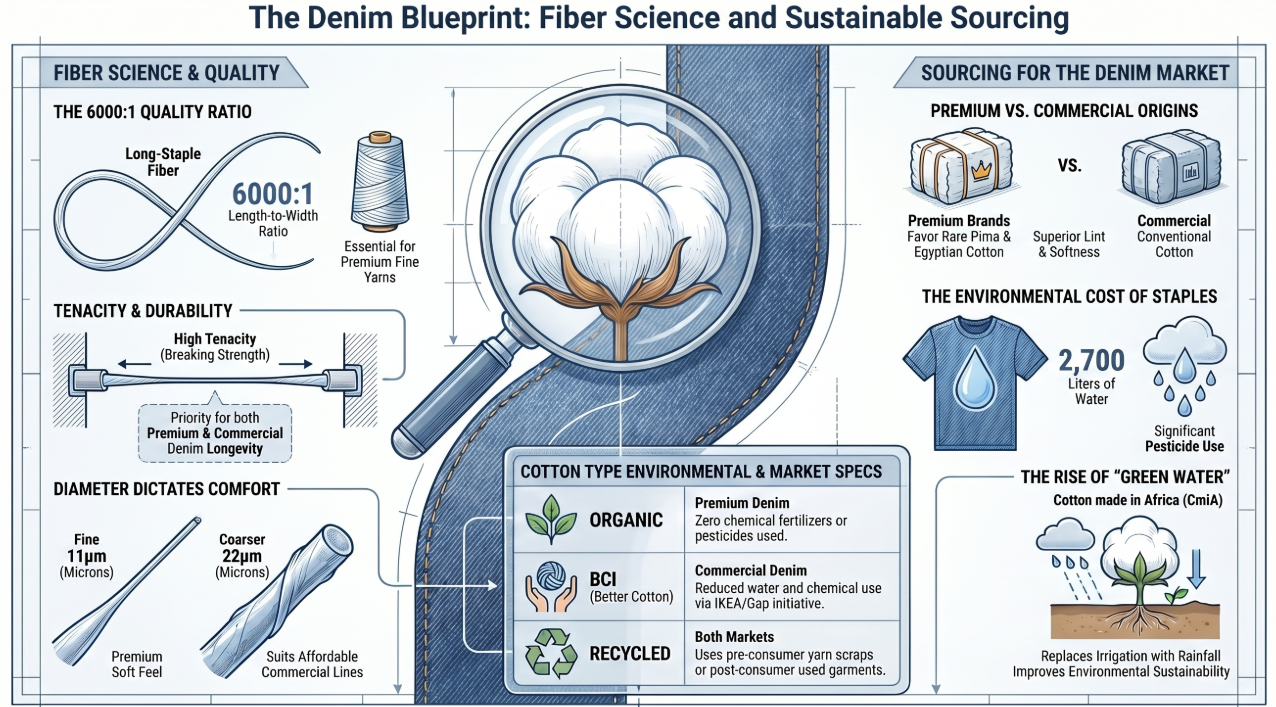
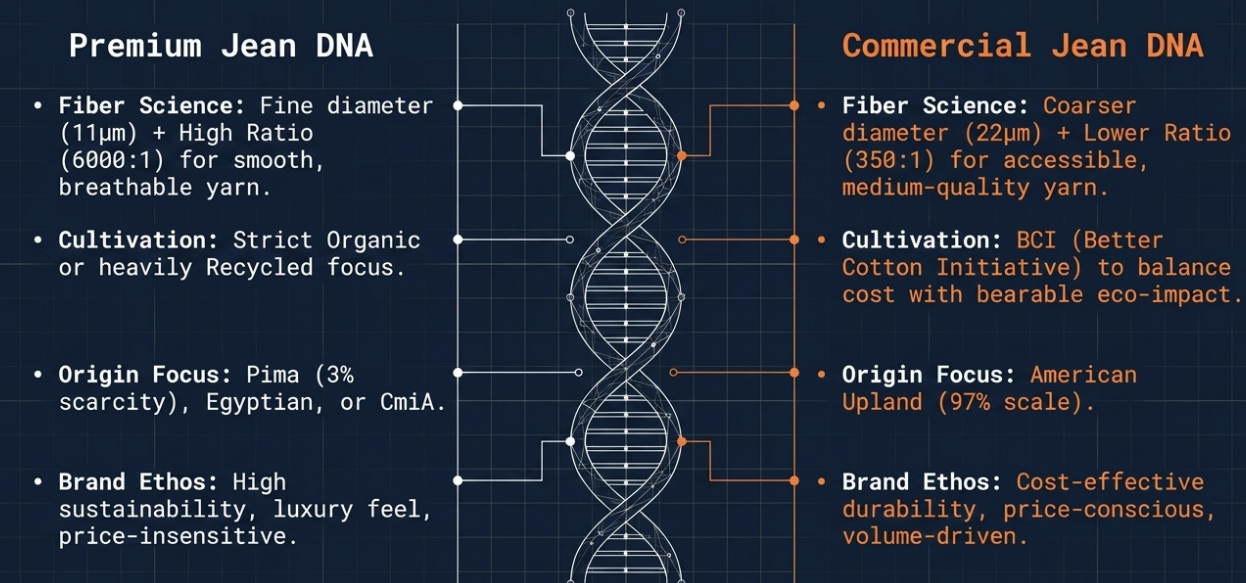
Concerning about diameter, these usually are 11micrometer to 22 micrometers. Due to these fine fibers, manufacturing of lightweight and fine garments are possible no matter if it a dense fiber. Cotton fibers of 11mm diameter are basically finer fibers. These fibers can provide better feel and comfortable touch with great breathability.
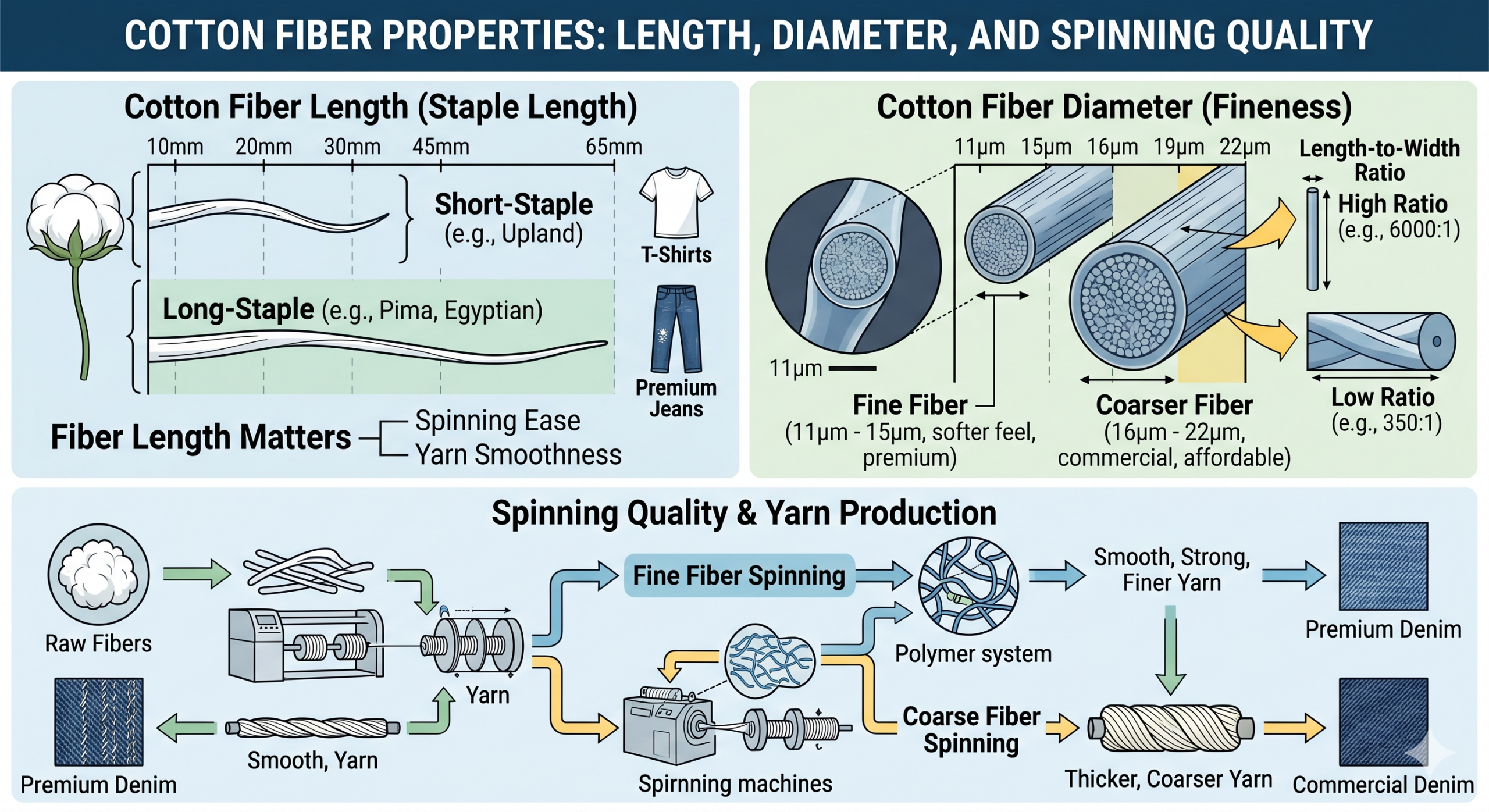
Due to these properties fine fibers are costly as compare to the coarser fibers. That’s why it is mostly preferred for the formation of premium jeans. On the other hand, commercial jeans are mostly made up of coarser diameter fibers which are available in affordable range.
The length to width ratio of a cotton fiber is usually 6000:1 (for the lengthier ones) and 350:1 (for the short fibers). The quality of spinning into yarns is directly proportional to this ratio. Short fibers are mostly used to form coarser yarn that are used for the composition of commercial denim and have medium quality, whereas high length fibers are used to form the finer yarns that provide the premium quality. That’s why used by many premium jean’s brands. Color of cotton fiber vary from climate to climate. It is dependent on soil, environment and other factors too. As if more amount of protein and minerals provided to the crop influences its color greatly.
Tenacity is basically the strength that shows how much fiber can hold the force before breaking. Both commercial and premium jeans brands are focused towards the durability and robustness of their product that’s why fibers with high tenacity are preferred for both markets.
Elastic plastic nature: These are inelastic in nature. Presence of hydrogen bonds prevent these from sliding one another since these keep them within polymer system. Extremely bending of fabric leads towards strain on fibers or polymer fracture due to presence of crystalline polymers ultimately leading to polymer disarrangements. When premium & commercial denim jeans required flexibility, they add some percentage of stretchable yarns such as spandex, elastane.
Hygroscopic nature: Cotton fiber has very absorbent nature due to presence of polarOH groups in polymers. These polar molecules attract polar water molecules. Due to this hygroscopic nature, premium & commercial jeans are prevented to develop static electricity.
Thermal property: These fibers are good conductors of heat energy, which make cotton garment withstanding hot ironing temperature. But increase in temperature excessively can cause it to burn without any melting, which indicates that it is not thermoplastic.
Different type of cotton
Different types of cotton based on their cultivation. Initially conventional cotton was most common cotton that used in most of the industries, but by the passage of time, industries gain ecological awareness and find a way to cultivate cotton in a most ecofriendly environment.
Conventional cotton:
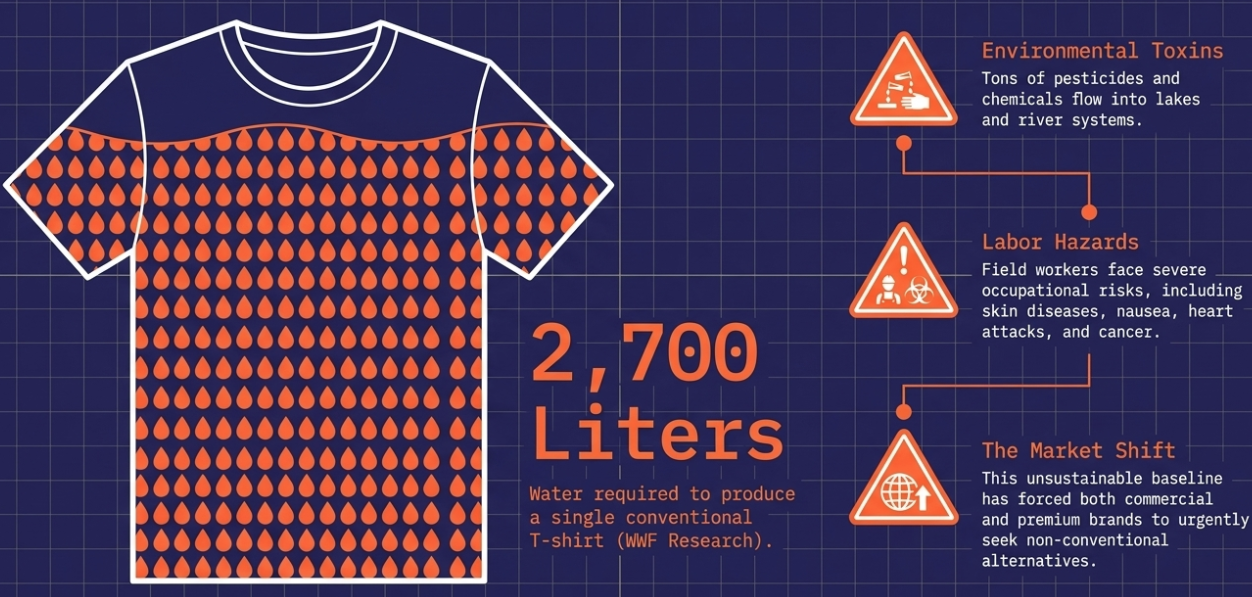
Cotton produced from conventional method, which consumes a lot of water. According to the research of WWF, a single T-shirt produced from conventional cotton utilize 2700 liters of water. Tons of pesticides and other chemicals are used for the production of conventional cotton. These chemicals and pesticides contribute a lot to pollute our environment by flowing into lakes and rivers. Labors who spend most of their time in field can become the victim of skin diseases, heart attack, nausea or even cancer. Due to all these reasons, most of the premium and commercial jeans brands try to prefer non- conventional cotton like BCI cotton and Organic cotton.
BCI cotton:
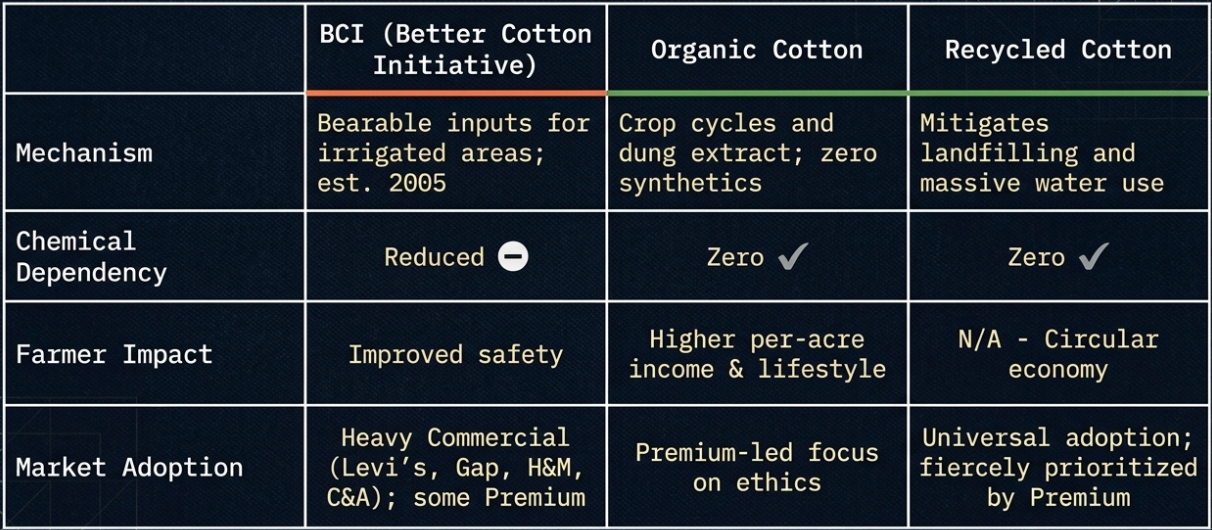
BCI stands for better cotton initiative. In 2005, the concept of BCI had started, WWF and some sustaining organizations like IKEA, Gap lnc., Adidas, Organic Exchange, pesticide action network UK and Oxfam came on board to discover a healthier substitute of conventional cotton. BCI cotton required bearable amount of water, pesticides and fertilizers. This concept is best for the irrigated and productive areas where organic cotton formation is not feasible. It is mostly used by commercial brands but some of the premium brands are also using BCI cotton because now a day’s consumers are well aware about the ecological and social impacts. Levi’s, Gap, C&A and H&M are the most highlighted brands that are more concerned about sustainability and using BCI cotton in their denim products.
Organic cotton:
Organic cotton is cultivated without any use of chemical fertilizers and fabricated pesticides. Quality of soil remains under control by the help of crop cycle and the only extract comes in the form of dung. Therefore, environmental impact has reduced significantly by generating safe and clean cotton while producing ecological cycle. The initiative of organic cotton has facilitated many farmers to improve their life style by growing their per acre income. Premium denim brands usually prefer organic cotton more than commercial denim brands because premium denim brands are more focused on sustainability and ethical practices.
Recycled cotton:
According to recent research, massive usage of water along with parasites and landfilling from textiles cotton is affecting environmental conditions. In order to reduce these effects recycled cotton has introduced. There are two types of recycled cotton.
- Pre-consumer cotton: It made through the recycling of residual yarns and byproducts of fabric.
- Post-consumer cotton: It made through the recycling of used garments, household items, curtains, towel etc.
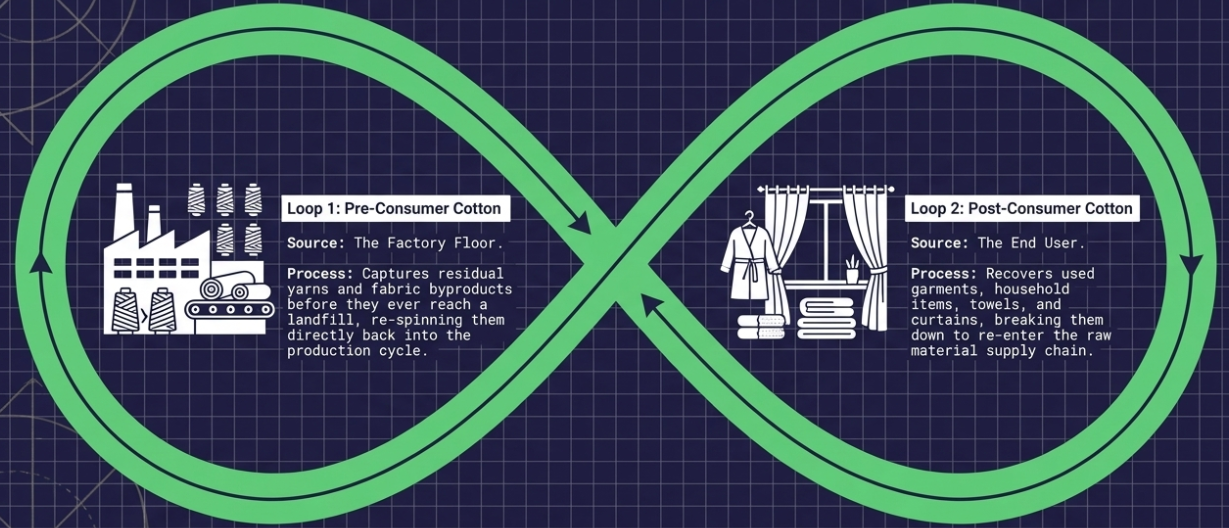
Recycled cotton is preferred by both commercial and premium denim brands because of its sustainability. While premium denim brands are more likely to use recycled cotton because they prioritize sustainability and are more concerned about healthy environment.
Mostly used cotton by premium and commercial denim
Most of the commercial and premium denim brands are using hangtags in their jeans in which they provide the information regarding the origin of cotton such as cotton made in Africa, American cotton, Egyptian cotton and Indian organic cotton. Whereas, some brands are still not giving attention on it.
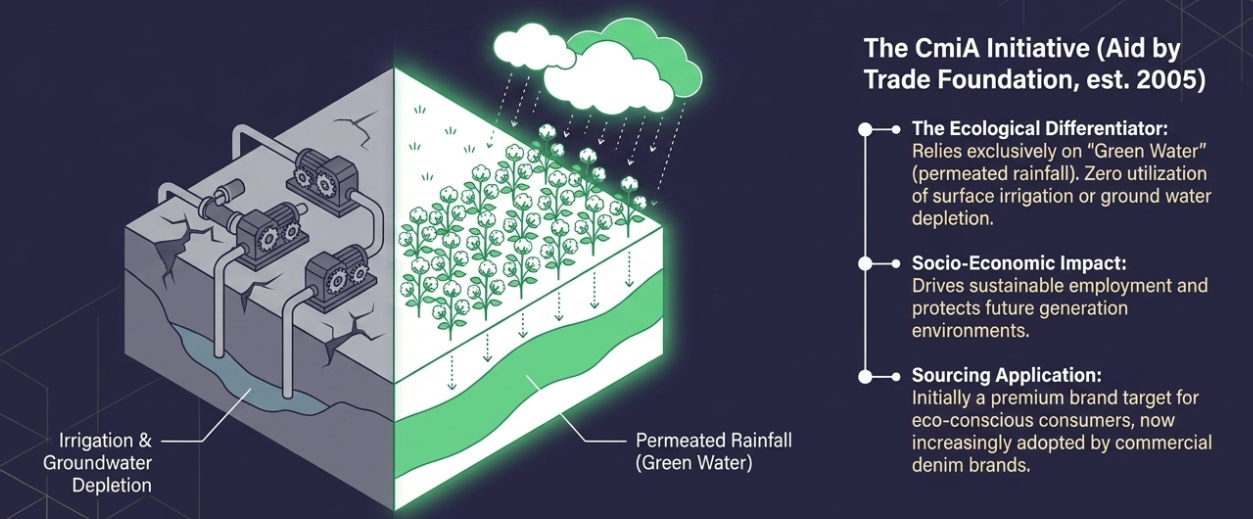
In 2005, Aid by Trade Foundation (AbTF) took an initiative of cotton made in Africa (CmiA) to help people through employment, to give better future for coming generation and to keep the environment sustainable. Ground water or water from irrigation from surface is not used for the cultivation of CmiA, whereas it depends on permeated rainfall, known as green water. In order to target the ecological concerns consumers and to moving towards the sustainability most of the premium brands are forming their denim products with cmiA and due to mentioned reasons some of the commercial denim brands have also started to use this cotton.
Two categories of cotton are produced in America. One is “American upland cotton” and the other one is “Pima cotton”. Both cotton categories have mostly similar characteristics. The major difference is in the color grading because American cotton is little less yellow than Pima cotton. Pima cotton is stronger and soft due to its longer staple length. Pima cotton is hard to find because it is more expensive and its growth is only 3% in USA. American pima cotton is generally preferred by premium denim brands because of its exceptional quality, softness and durability. While American upland cotton is mostly used for commercial denim production because it can provide required quality in cost effective range.
Egyptian cotton is one of the extraordinary types of cotton with high fiber quality. It expands its name in cotton’s world due to highest lint quantity. Because of the quality several other parts of world are developing Egyptian cotton, especially in United State where it is recognized by Pima cotton or American-Egyptian cotton. Because of this extraordinary quality it is ideal choice for premium denim brands, so they can deliver high quality denim products. On the other hand, Egyptian cotton is much expensive and not preferred by commercial denim brands because these type of denim brands are price conscious.
(436)