The Ultimate Guide to Types of Denim Fabric: From Raw to Stretch

Latest posts by Shah Miran Munshi (see all)
The Ultimate Guide to Types of Denim Fabric: From Raw to Stretch
Types of denim fabric
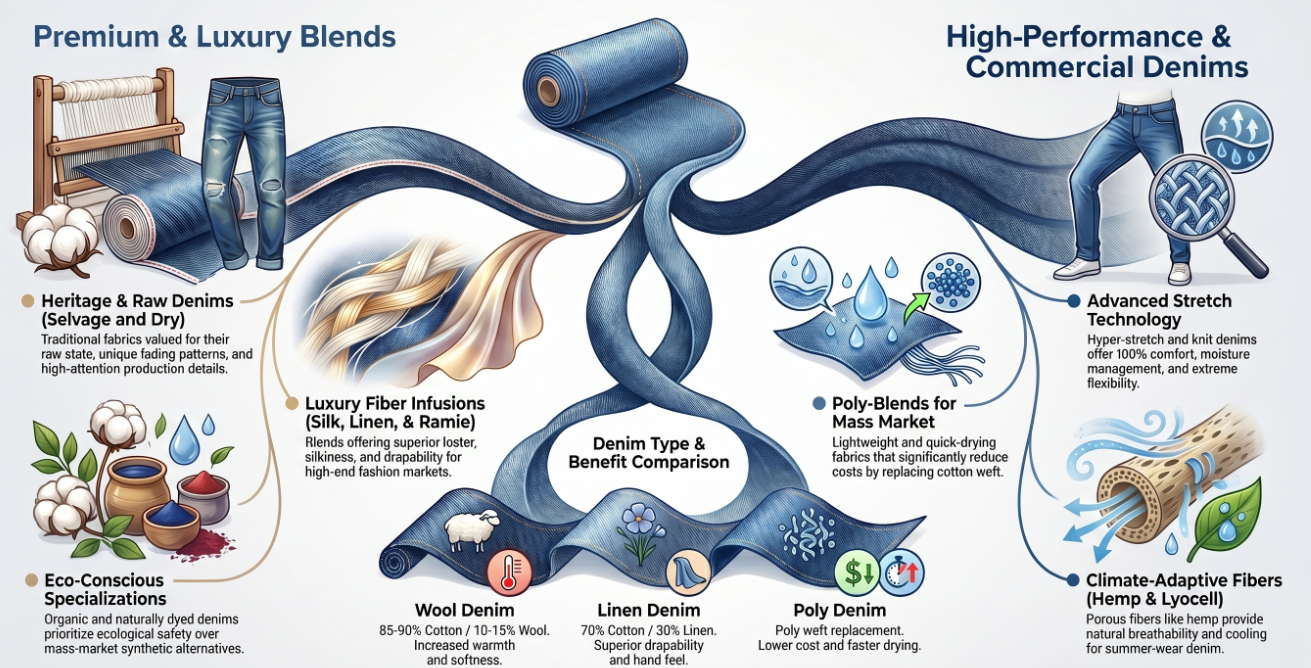
Denim industries have made different types of denim fabric based on their formation, processing, dyestuffs, fiber blends and stretch-ability. Some categories of denim are discussed below.
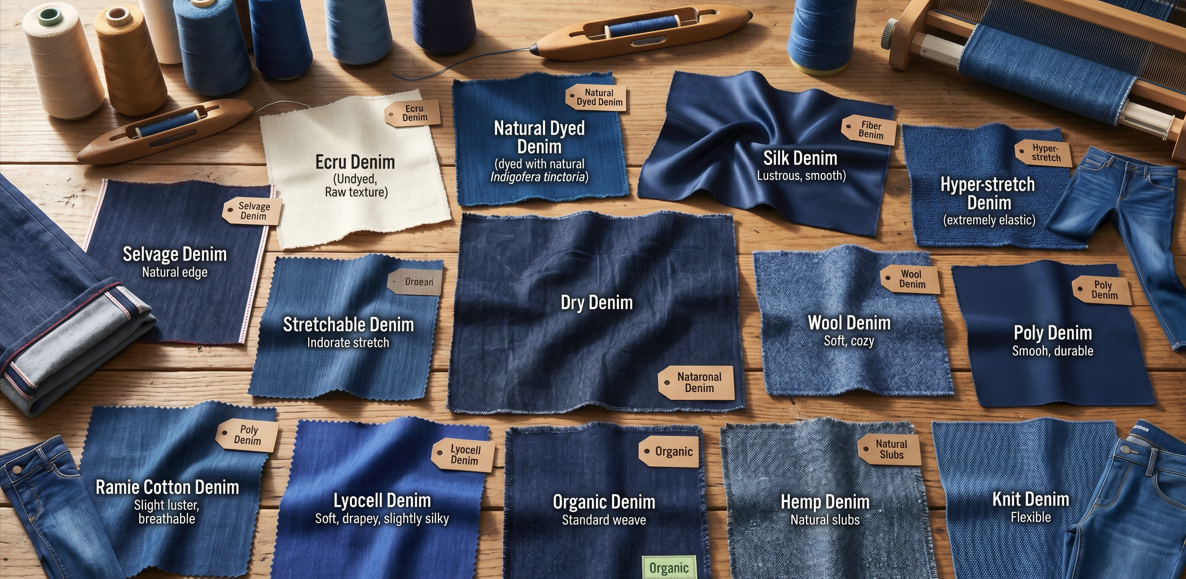
Dry denim
Dry denim is that denim fabric which does not experience washing after the dyeing procedure. Normally a denim fabric has washed to achieve required pre-shrinkage and softness and worn out appearance is given to the fabric by using different techniques. On the other hand, dry denim fades on the basis of stresses that industry used during its formation. The fading of dry denim also gets affected by the wearer’s body and daily routine activity. It is established for premium denim and contributes a very small portion in overall market. Dry denim is initially in dark color and then slowly its color fades away with time and washings.
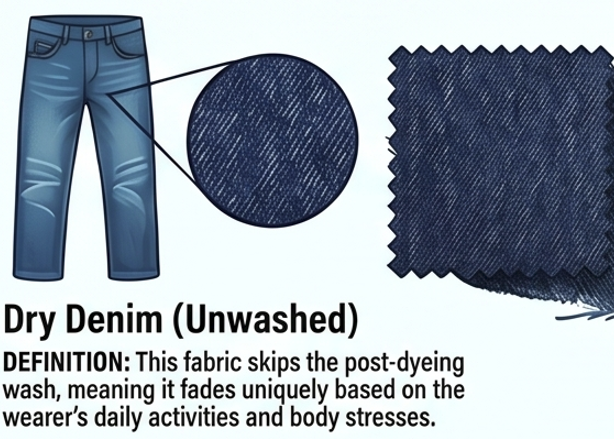
Selvage denim
In selvage denim, a fresh natural edge is formed that cannot be untied. This type of denim is mostly offered in raw or unwashed state. Selvage denim is usually made on shuttle looms. The edge of this denim is typically stitched with a colored thread. Red is the most common color for it. Edge of the selvage denim is mostly placed on the out seam of pants. The selvage denim pants are mostly dyed with synthetic indigo dyestuff. This denim is more associated with the premium jeans brands because during production process it required high attention towards details and provides the high quality denim products.
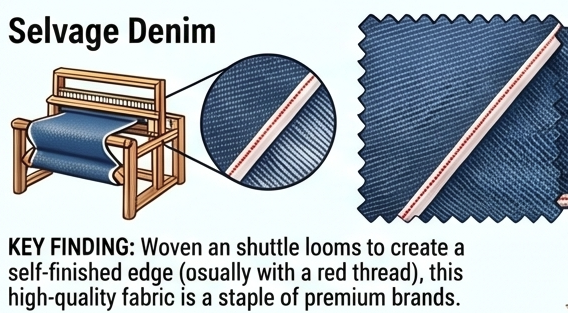
Linen denim
It is the considered as strong, stylish and advanced luxury denim. It gains a lot of attention due to new fashion trend of free casual denims. Chemical procedures of linen denim are similar to cotton because of its cellulosic nature. The dresses, jackets and skirts are usually made from medium weight linen denim that could be around 6oz/yds. Mostly preferred cotton/linen blend ratio is 70/30 that produced denim of good drapability and good hand feel. In order to target the fashion and trend conscious consumer this type of denim is preferred in premium denim brands.
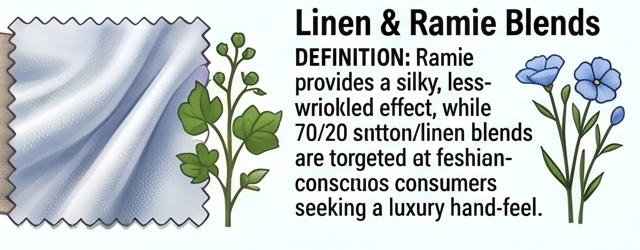
Ramie cotton denim
Ramie cotton blends have wide pricing range and are available in multiple combinations. Ramie is basically a plant fiber that usually blends with cotton fibers to provide lustrous, silky and less wrinkling effect to the fabric. Ramie fibers do not have good strength like cotton but show good performs in denim blend that’s why this denim is used in premium products.
Silk denim
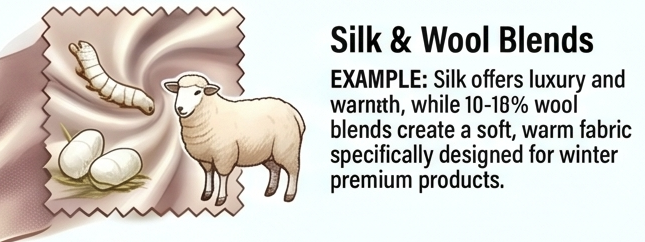
As silk yarn provides a great soft, lustrous, drapable and strong fabric. It also remains in demand due to its delicacy with resiliency, sheerness with strength and lightness with warmth. Due to all these silk fiber properties researchers give attention towards denim silk formation with different blending ratios to get soft, lightweight, flexible, resilience and drapable type of denim. Eri silk is the type of silk that has thermal property approximately equal to the wool. Denim of 100% eri silk is used in winter season. Cotton silk denim and linen silk denim are comfortable and have silky appearance. It is associated with premium denim brands to fabricate the expensive and luxurious denim products and jeans.
Wool denim
Wool cotton denim is the most widely used denim. Initially wool denim was not much comfortable and had not protection against cold weather. In order to overcome these problems, researchers made wool denim with different blend ratios. In new denim, 1015% wool fibers get blended with 85-90% cotton fibers. This new denim meets all the requirements and being used for premium denim products. To control wool shrinkage is the biggest challenge of wool denim formation. To control it, wool fibers are either coated for processing or removed by the help of an acid. For shrinkage reduction, the unfinished wool denim passes through chemicals in washing process and achieves the desired look. Newly formed denim is much warmer and softer as compared to the conventional wool denim.
Poly denim
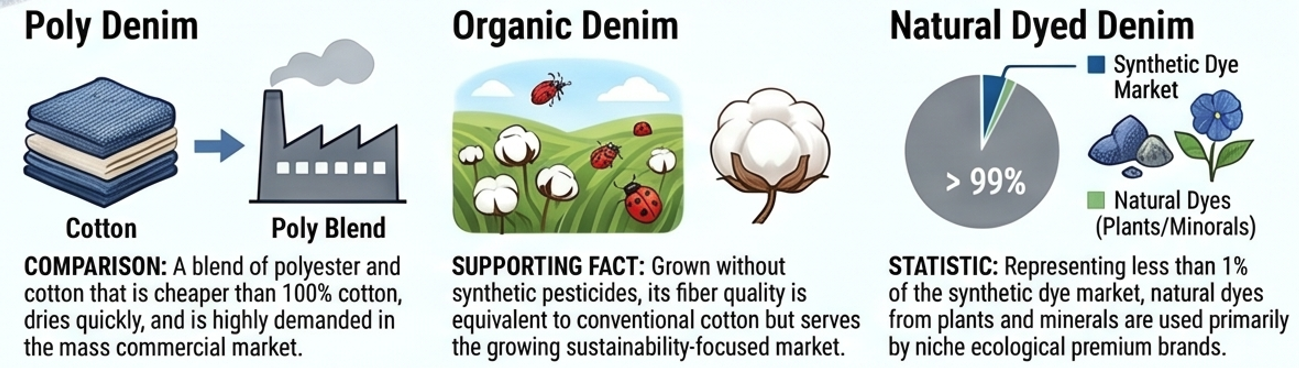
Poly denim is made from the fibers of polyester cotton blend. This type of denim is light in weight, dries quickly and have smart appearance. It is highly demanded in commercial denim market. The pantsuits of poly denim fabric are most wanted because of their formal or casual look. The utilization of poly cotton denim has increased at faster rate because of its two main facts. First it is much cheaper than other type of denims and secondly it replaced 100% cotton by using poly weft.
Organic denim
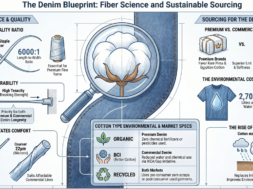
As discussed earlier that organic cotton does not use any synthetic pesticides and fertilizers because agricultural chemicals invest the most in pollution. The denim made from this type of cotton is known as organic cotton. In regards of quality, organic cotton’s quality (such as fiber finesses, strength and length) is almost equivalent to conventional cotton. Many sustainability concerns premium & commercial denim manufacturers promote the organic denim in the market.
Natural dyed denim
Natural sources such as plants, vegetables and minerals are the basic source of natural dyes. These dyes can be utilized for cosmetics, textiles, foods and drug manufacturing industries. Natural dyes market consumption is much smaller as it does not even cover the 1% market consumption of synthetic dyes. Natural denim is just demanded due to its ecological feature. Natural dyes have very limited field in denim, some of the premium brands are using it because of its ecological aspect. Indigofera tinctoria is a natural indigo vat dye that can provide the shade similar to synthetic indigo dye. High concentration of dye is utilized to get the synthetic indigo shade because it is weaker as compared to the synthetic indigo.
Ecru denim
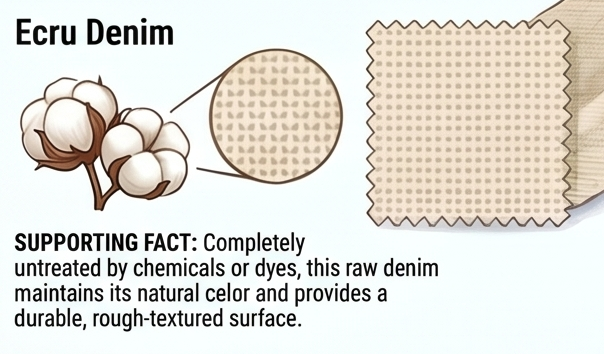
Ecru denim is not treated with any chemical or dyeing operation and it is also termed as untreated or raw denim. This denim is available in its natural color and surface. It also provides rough and uneven appearance. This denim is made from conventional method and provides durability that softens the fabric and produces rear-fading pattern after every wear and wash. Ecru denim gains a coating because of its nature and sometimes it needs breaking operation at its first. Ecru denim is favored from both premium and commercial brand markets. Because it can provide verity of effect after the application of different washes and finishes.
Hemp denim
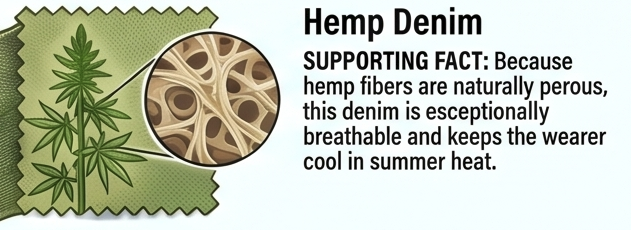
Hemp is the plant fiber that has fineness almost equal to the cotton fibers. Hemp fibers have rounded top that provide softness to the hemp denim without getting special treatments. Hemp denim has good breathability because hemp fibers have pores and holes on their surface. This denim can be worn at summer weather because it keeps the body at low temperature and wearer does not feel the hotness. All these features make this denim suitable for premium jean brands.
Stretchable denim
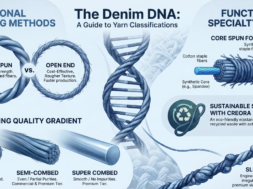
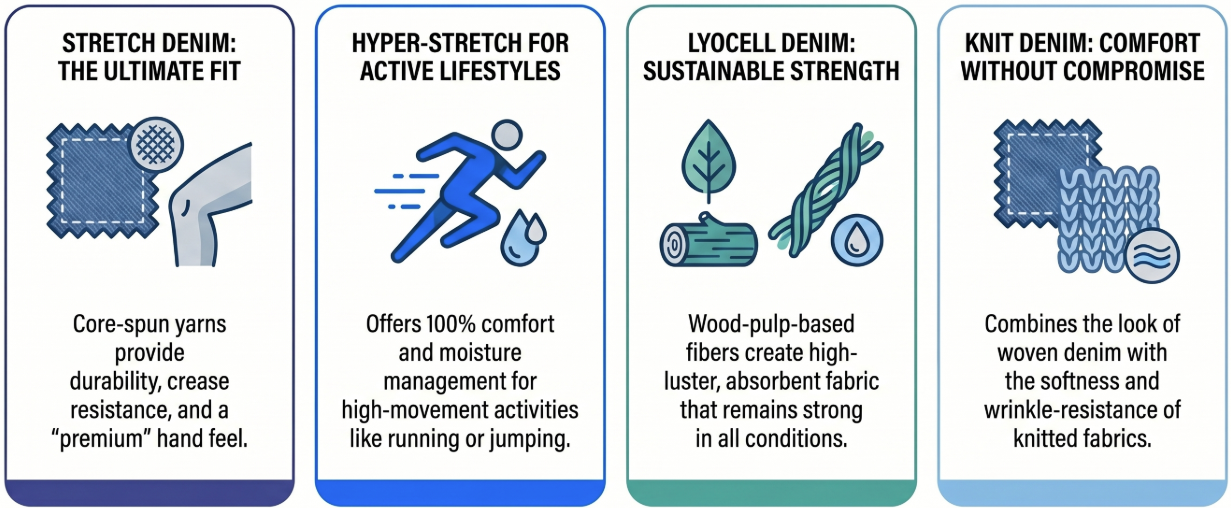
Comfortability is the first priority of customers. Stretch denim can be used in functions while carrying the good fashion style. It gains reputation in the field of sports due to its stretching property and also experiencing new regions in different textile field. Elastic denim shows outstanding performance towards ultimate fit. Stretch denims are popular for the formation of premium and commercial products because for their characteristics such as durability, comfortability, crease resistance, minimum ironing requirement, good drape and hand feel. Denim gets stretched due to usage of elastane or stretchable filaments at the core of core spun yarn that is mostly used for the weft yarn.
Hyper-stretch denim
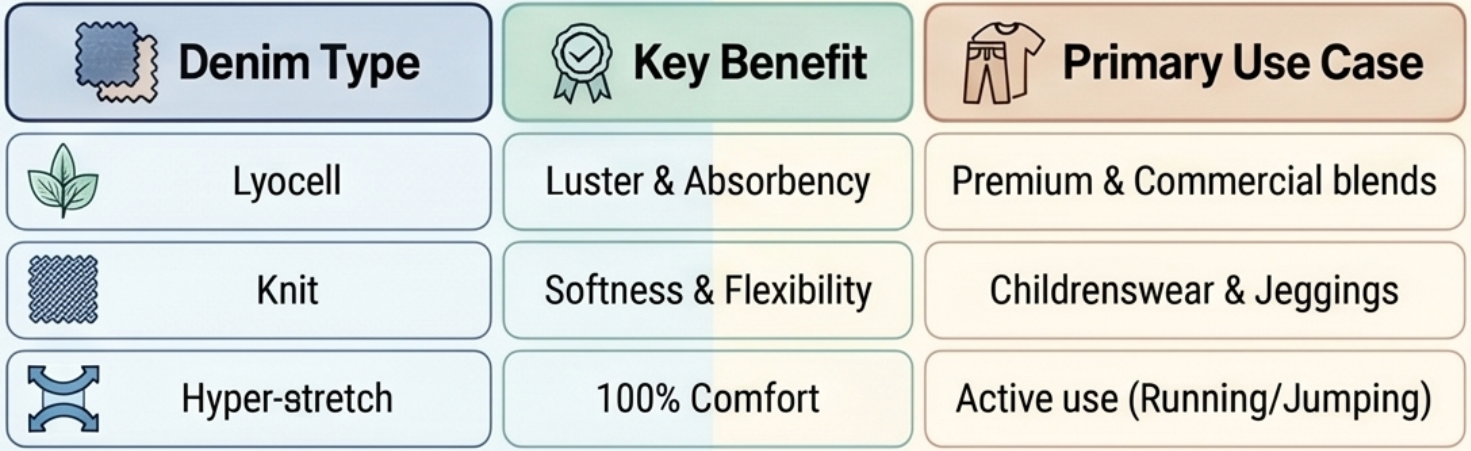
Hyper-stretch denim is used for getting 100% comfort. It gets exactly fits on wearer’s body and does not change its size easily. These denims have high moisture management capability as it quickly transfers the body sweat into the fabric surface. It has excellent breathability to keep the body temperature cool in hot climate. It provides wide movement range without damaging its original shape. Jumping, running and other exercises can easily be done by wearing this type of jeans as it provides complete comfort. Most of the commercial brands use this denim to target the audience who need stretchable comfortable jeans at lower cost.
Lyocell denim
A denim made from the blend of synthetic fibers “lyocell’’ is known as lyocell denim. These fibers were initially made by birla cellulose, basically made from wood pulp. Wood pulp is dissolved into a viscous solution by the help of solvent. Then the solution is squeeze out while passing through the filtration to form the filament. The solvent substances can easily be removed after washing.
As lyocell is the cellulosic fiber, so it has good absorbency and it shows good strength in both wet and dry conditions. Lyocell denim shows great luster, high absorbency, great strength, good dye penetration, drapability, dimensional stability and good wash and wear features. All these characteristics made lyocell denim one of the most popular fabric of today’s both commercial and premium denim world.
Knit denim
A denim fabric that is formed, through knitting process while having same look like woven denim but has all the properties of knitted fabric such as good wrinkle resistance, comfortability, softness and stretch ability is known as knit denim. This type of denim does not only have flexibility and wide movement range but it also provides great breathability, drape and feel. Knit denim came into limelight when the trend of jeggings gains the importance and popularity in denim world. Conventionally, highly tight jeggings were used to produce from woven denim but it was not able to provide good comfort. This became the main reason to form a knit denim. A study was conducted on children’s denim products and exposed that all parents and children need soft, comfortable, lightweight and easy to care jeans. All these properties are present in knit denim. By fulfilling customer’s demand, knit denim gained quick popularity as compared to woven denim also opened the door for new business market. Knit denim provides many benefits in which comfortability comes on top. Further it is most likely to preferred by commercial jeans brands because of easy mass production and lower manufacturing cost.
(603)